Quality and Stars
Checking the evidence before closing care gaps
Care can be complete while the evidence is still missing. Follow an eye exam from the note to the quality record.
Every quality team has seen it. The dashboard shows a measure at goal in October; the plan’s numbers disagree in February. In between, gaps were marked closed that the record could not support.
Robert Washington and Susan Chen show why. Both had their care done. Neither counted until someone could prove it.
01A status is a claim
On a worklist, closed often means somebody clicked closed. A call happened. A member said she went. An order was placed. That is useful activity, but alone it does not establish measure compliance. Member reported services can qualify when collected and documented under the applicable requirements.
HEDIS does not score activity. It scores what the record shows: the right service, by the right kind of clinician, inside the right window, matched to the right member. Until then, the gap is open. Once evidence is submitted, the plan still has to accept it; until it does, the honest state is awaiting data.
02What counts for an eye exam
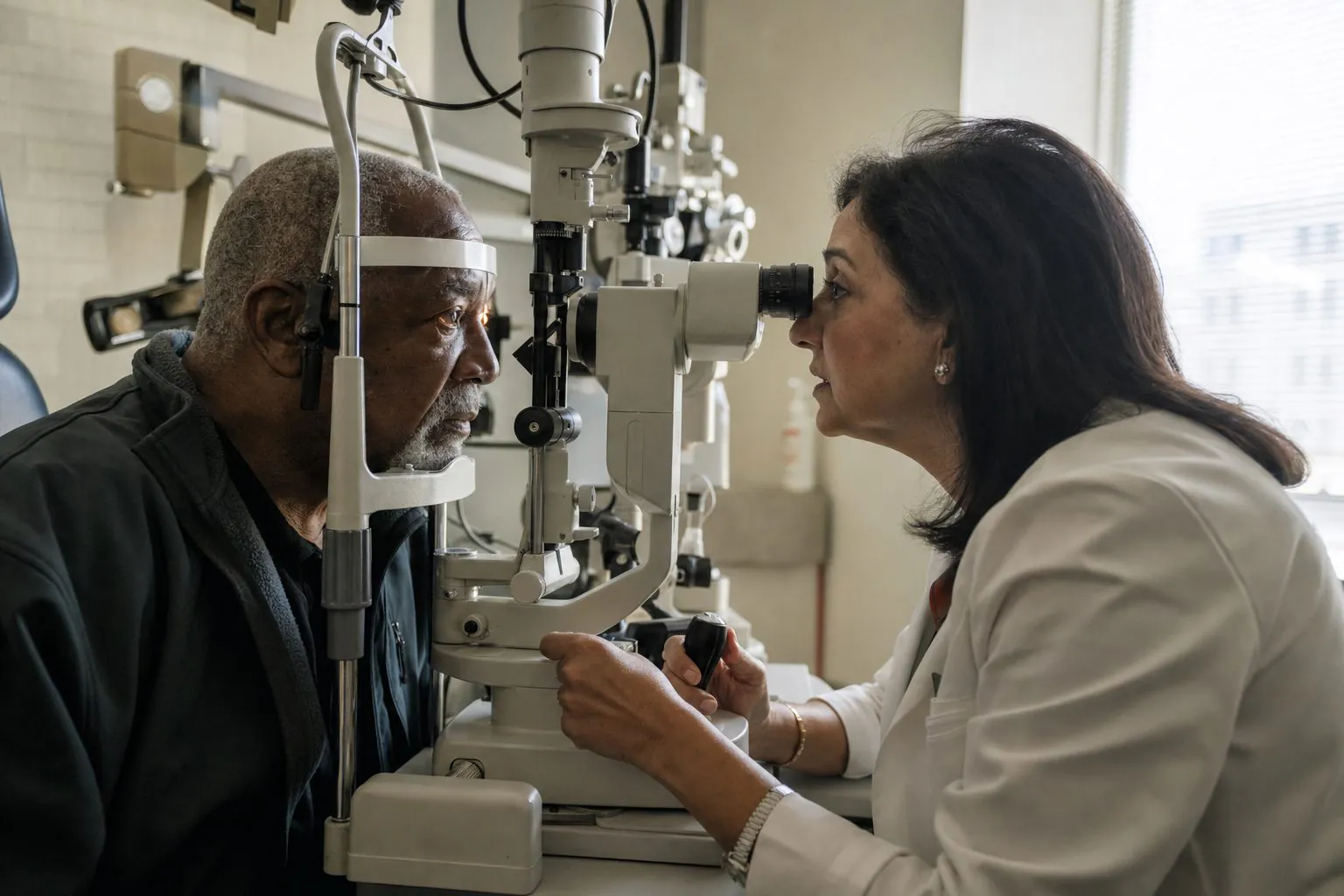
Robert is 69 and has type 2 diabetes. For the HEDIS eye exam measure, EED, he needs a retinal exam by an eye care professional during the measurement year, or a negative exam the year before. Claims showed neither.
He had seen his optometrist on September 18; the note sat in the regional HIE. The care gap closure AI agent found it three days later and checked each criterion: an optometrist, a dilated retinal exam, a date inside 2026, a documented result of no diabetic retinopathy. It prepared CPT II 2023F and a packet with the source attached.
- Eye care professional · J. Alvarez, OD
- Retinal exam · dilated, both eyes
- In MY2026 · Sep 18, 2026
- Result · no diabetic retinopathy
Emily Carter, Riverside’s quality lead, approved it with the source open. The plan validated the submitted evidence and reflected Robert’s gap as closed in its October 6 refresh. The gap is done, and the evidence stays attached for the day someone asks.
HEDIS does not score activity. It scores what the record shows.
03What counts for a mammogram
Susan Chen is 68. Her BCS-E gap showed open because no mammogram claim existed between October 1, 2024 and today. She had one on October 22 at Bayview Imaging, an outside center. The report came back by fax and joined 312 others that nobody had indexed.
The agent searched the EHR and found nothing. The HIE pointed to an imaging encounter at Bayview. The agent found the fax, matched it on name and date of birth, and read it: bilateral screening mammogram, CPT 77067, BI-RADS 1.
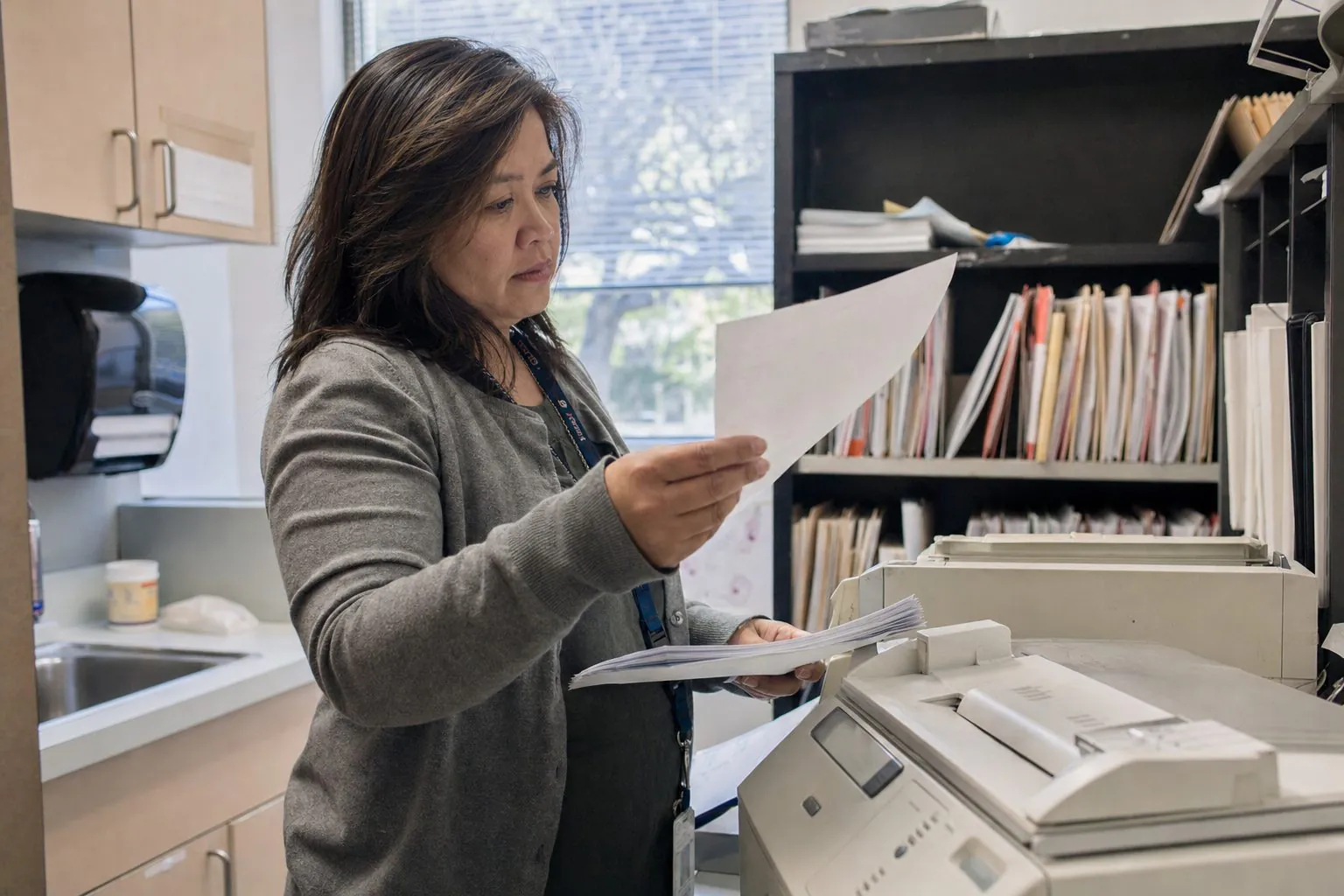
Maria Santos, a care coordinator, approved the evidence on October 27. The approved findings went to the plan as structured clinical data, with the fax attached as the source. Acceptance is pending. Susan’s gap is not done. It is awaiting data, and the record says so.
04Awaiting data is a real state
Teams resist this state because it makes dashboards look worse. It should. A gap with evidence submitted but not yet accepted can still fail: a mismatched date of birth, a missing result, a code the plan cannot map. Calling it closed hides the items that need attention before year end.
- Susan Chen · BCS-E awaiting dataNov 2
- Robert Washington · CBP open, recheck booked148/92
Quality items share one set of states, from signal to done. There is also excluded, for members who should not be in the denominator, such as a member in hospice. Others are measure specific: a history of bilateral mastectomy, coded Z90.13, excludes a member from BCS-E only. An AI agent can surface an exclusion. A person confirms it.
05Where people stay accountable
The agent never decides that care happened. It finds the source, checks it against the measure and prepares the closure only when the evidence meets it. In Riverside’s workflow a named person approves it with the source in front of them, the approval is logged with name and time, and the team submits it.
This is not caution for its own sake. Cut points can change every year, and plans are asked to show their work more often. Tracing every closed gap to a document and a decision beats showing a count.
06Questions to ask your team
- 1
How many gaps marked closed today have no source document attached?
- 2
Where do outside faxes go, and how long do they wait before anyone reads them?
- 3
For any gap, can you tell who approved the evidence and when?
Robert’s eye exam counted because someone could prove it. Susan’s will too, once the data is accepted. That is the finish line.
Fold clinical and product teamWritten with the care managers, coordinators and quality leads we build with.
See evidence-based gap closure