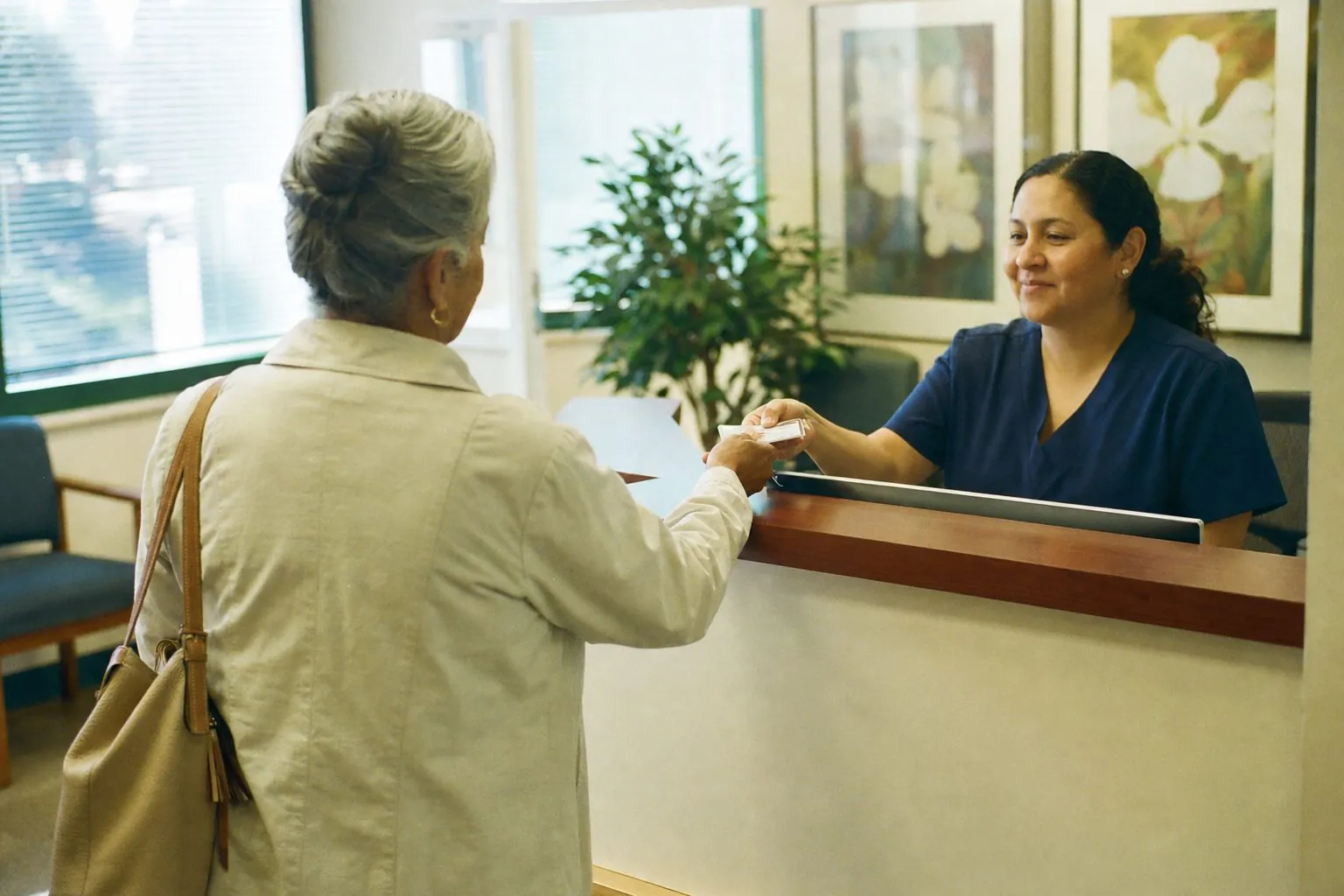
Transitions of Care
The first call after a hospital discharge
Margaret left St. Mary’s on a Monday afternoon. What her care team already knew decided whether the next call would help.
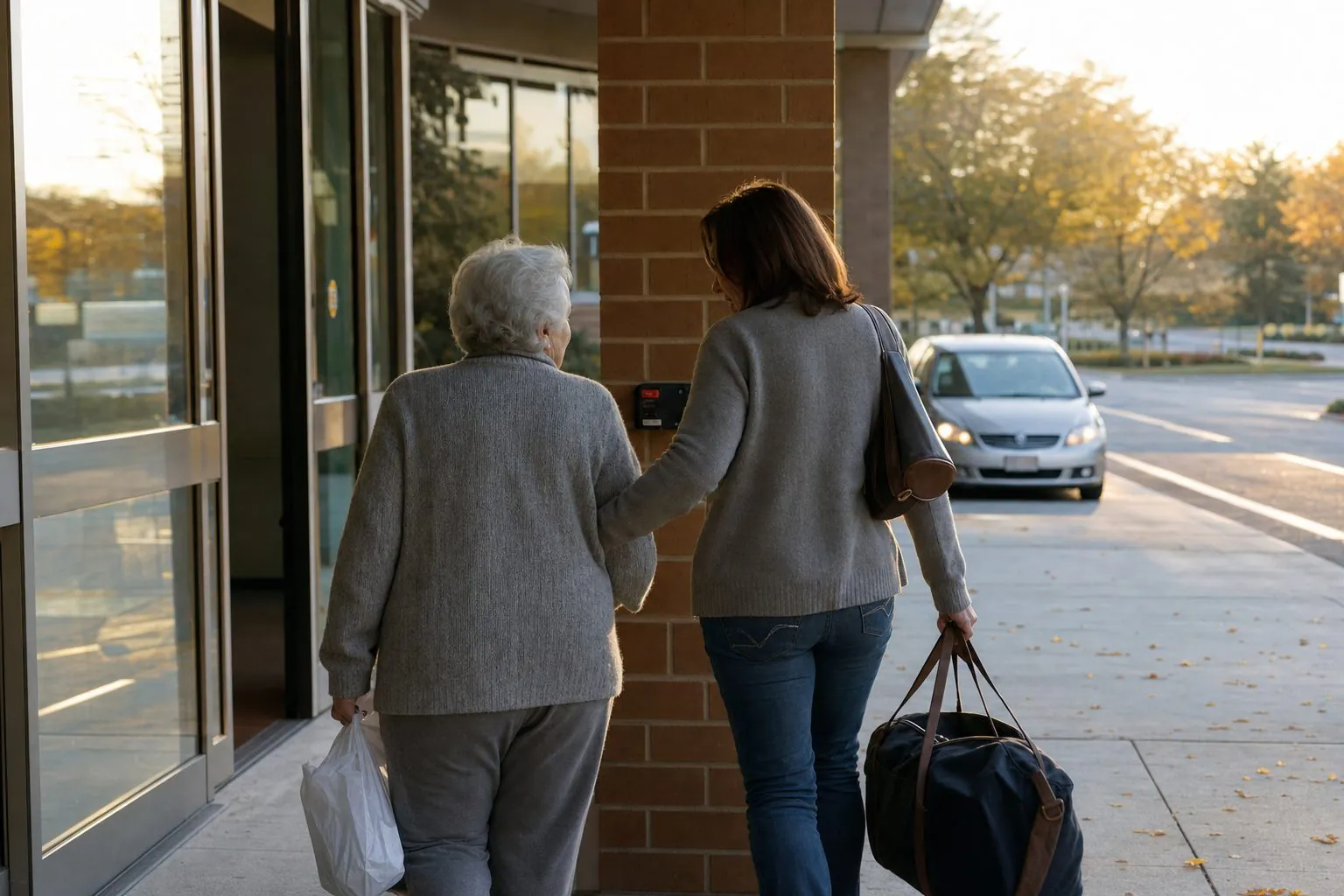
At 4:02 PM on Monday, October 26, St. Mary’s sent a discharge message for Margaret Ellison. She is 74, lives alone and was admitted for chronic systolic heart failure. Her daughter Claire drove her home. By the time they reached the car, Riverside Health knew Margaret was leaving, and little else.
That gap can leave the next care team without the context it needs. The cause is not carelessness. The context sits in four systems at two organizations, and no one owns carrying it forward.
01The discharge signal starts the clock but carries little context
An ADT A03 message tells you who left, from where and when, usually with a diagnosis code and an attending name. It does not carry the medication changes, why a dose went up, or that Margaret only answers the phone in the morning.
The clock starts anyway. Under Medicare’s transitional care management rules, the billing physician or NPP, or clinical staff under their direction, has to reach Margaret or Claire within two business days. An AI agent call never counts as that contact. For Margaret that means by Wednesday, October 28. A face to face visit within seven calendar days, together with high complexity medical decision making, supports 99496. The care team has to document medication reconciliation no later than that visit.
So the first job is not outreach. It is assembling what the caller needs to know.
02What gets lost between settings
Margaret’s discharge summary arrived eleven pages long. On page six, her medication list had changed in five places. The hospital stopped lisinopril and started sacubitril/valsartan, with a 36-hour washout after her last lisinopril dose. Furosemide and spironolactone were new. Her metoprolol dose doubled.
None of that was in the ADT message, and some of what mattered most was not in the summary either. Riverside knew things St. Mary’s did not: Claire is her authorized contact, Margaret is hard of hearing on the left, she prefers morning calls, and she bought a scale in April and stopped using it in June.
- Pulled the discharge summary
- Matched the care plan and notes
- Prepared the call
 Ready for Jordan Reyes, RNCall plan reviewed by Jordan Reyes, RNMorning call with Claire on the line
Each fact lived somewhere: a consent form, a call note from March, a line in a care plan. None of it was missing.
At a transition, context does not disappear. It stops reaching the person who makes the next call.
03AI agents prepare. The nurse makes the call.
In Riverside’s workflow, the transition of care AI agent opened a work item a minute after the discharge message and pulled the summary from St. Mary’s when it arrived. The medication AI agent compared the discharge and home lists and flagged the differences, including two for a pharmacist: the washout after lisinopril before starting sacubitril/valsartan, and potassium and kidney function on spironolactone.
Daniel Wright, PharmD, reviewed both that evening. His note went onto the same record.
Neither AI agent called Margaret or reconciled her medications. Those are clinical acts, and they belong to licensed people. The agents made sure that when Jordan Reyes, RN, picked up the phone at 9:20 AM on Tuesday, she had the right list, the pharmacist’s note, Claire on the line and a note that Margaret is hard of hearing on the left.
- Medication AI agent · 3 new, 1 changed, 1 stopped
- Daniel Wright, PharmD · review pending
- Jordan Reyes, RN · call pending
- Scheduling AI agent · visit pending
04The context the nurse gathers goes back into the record
Jordan documented the medication reconciliation during the call. Margaret had not started the new medicine and was still taking lisinopril from her home supply. Dr. R. Hayes stopped it that morning, and the new medicine starts 36 hours after her last dose. Claire agreed to text daily weights. The scheduling AI agent booked a visit with Dr. R. Hayes for Thursday at 10:30 AM, and Claire will drive her.

Every detail went back into Margaret’s record, attributed and timestamped. The next person who touches her care, a pharmacist checking potassium or a coordinator closing a quality gap in December, starts from what Jordan learned, not the hospital’s version of her.
That is context that travels. A workflow that only sends information forward starts over at every handoff. One that writes it back gives the next person a fuller record.
05Does context travel to the next person who calls?
Three questions are usually enough.
- 1
When a discharge arrives, how long until the person making the call has the medication changes in front of them?
- 2
Where does a member’s preference live, and would the nurse see it before dialing?
- 3
After the call, does what you learned show up the next time anyone opens the record?
If the honest answer involves a spreadsheet, an inbox or somebody’s memory, the problem is not effort. No one owns the patient record between settings. Fold does that job. AI agents keep it current within the permissions you set, and the people who decide see it before they act.
Margaret’s visit with Dr. Hayes is booked for Thursday, October 29. Done, for this transition, means a signed visit, documented reconciliation, labs reviewed and a plan Claire can follow. Until then, the work item stays open.
Fold clinical and product teamWritten with the care managers, coordinators and quality leads we build with.
See the discharge workflow